
Farmers are being urged to act as sheep face a potential ‘double whammy’ for lameness this autumn, with a hot, dry summer potentially leaving hoof horn harder and more brittle¹ before the current warm and wet conditions create an ideal environment for footrot¹.
With the breeding season starting, getting on top of lameness is particularly important, as problems at this critical point in the breeding calendar could have costly consequences for flock performance
“The change in environmental conditions can have a significant bearing on the footrot challenge within a flock1,” explains MSD Animal Health Veterinary Advisor Dr Kat Baxter-Smith.
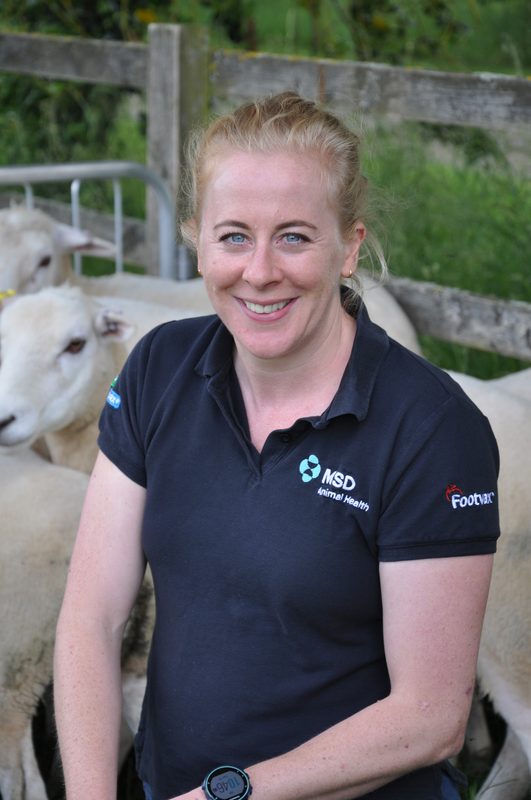
“Moisture is an important factor in the survival and spread of Dichelobacter nodosus1, so farmers should be particularly vigilant as conditions become wetter. Looking out for early signs of lameness and dealing with cases promptly can help prevent infection from spreading through the flock.
“It is also important to consider the bigger picture. If a flock has a history of footrot, now is the time to review what has and hasn’t worked previously and make sure an appropriate control programme is in place.”
Footrot is an infectious disease caused by the Gram-negative bacterium Dichelobacter nodosus. It can range from interdigital dermatitis through to more severe disease, where the hoof horn separates from the underlying tissue. Fusobacterium necrophorum, which can be found in sheep faeces and diseased feet, can also contribute to the development and severity of foot lesions.
Research has demonstrated a relationship between rainfall and footrot incidence, with increasing rainfall in the preceding weeks associated with increased disease incidence1.
Time to act
While tackling lameness is important at any time of year, the timing is particularly significant as tupping approaches.
“Having lame sheep in the flock as tupping gets underway and during pregnancy can potentially have a much bigger impact than simply the immediate cost of treating individual animals,” says Dr Baxter-Smith.
“A lame ewe or tup may be less able or willing to move and behave normally during mating and pregnancy, which could affect conception rates and also growth unborn lambs. Any delay to conception can have knock-on implications for lambing dates, scanning results and flock productivity.
“Getting on top of lameness therefore makes both good welfare and good financial sense.”
Farmers are encouraged to use the Five Point Plan of treat, cull, vaccinate, quarantine and avoid, as the basis of a comprehensive approach to reducing lameness and controlling footrot within the flock.
Vaccination is an important part of this approach, particularly for flocks with a history of footrot. Footvaxâ stimulates the sheep’s immune response against Dichelobacter nodosus, helping to reduce the impact of footrot when used alongside other management measures.
“Vaccination is not a standalone solution, but it is an important tool within a wider footrot control programme,” says Dr Baxter-Smith.
“Farmers should be identifying and treating lame sheep promptly, reviewing their records to identify repeat offenders and considering culling where appropriate. Quarantine and biosecurity are also important, particularly when introducing sheep to the flock, alongside management practices that help reduce the opportunity for infection to spread.
“Where vaccination is appropriate, timing is also important. Farmers using Footvaxâ ahead of tupping should ensure two doses are administered at least six weeks before tupping, so it is incorporated into the flock health programme well ahead of mating. Vaccinating is also possible during pregnancy, as long as it is four weeks after tupping or before lambing.
“Sound feet are essential for healthy, productive sheep, and with tupping approaching, this is an important window for farmers to make sure lameness is firmly on the agenda. The message is really about being proactive,” adds Dr Baxter-Smith.
References
- Smith EM, Green OD, Calvo-Bado LA, Witcomb LA, Grogono-Thomas R, Russell CL, Brown JC, Medley GF, KilBride AL, Wellington EM, Green LE. Dynamics and impact of footrot and climate on hoof horn length in 50 ewes from one farm over a period of 10 months. Vet J. 2014 Sep;201(3):295-301. doi: 10.1016/j.tvjl.2014.05.021. Epub 2014 May 23. PMID: 24973007; PMCID: PMC4168150.
Footvaxâ contains antigens from 10 serogroups and/or serotypes of Dichelobacter nodosus and is indicated for the active immunisation of sheep as an aid to the prevention of footrot and reduction of lesions of footrot. Legal category: POM-VPS.
Further information is available from the SPC, datasheet or package leaflet. MSD Animal Health UK Limited. Registered office Walton Manor, Walton, Milton Keynes, MK7 7AJ, UK. Registered in England & Wales no. 946942. Advice should be sought from the medicine prescriber.
Prescription decisions are for the person issuing the prescription alone.
Use Medicines Responsibly.
© 2026 MSD Animal Health UK Limited.
UK-OVL-260900002
About MSD Animal Health
MSD Animal Health, a division of Merck & Co., Inc., Rahway, N.J., USA, is a global animal health business committed to The Science of Healthier Animals™. For more than 130 years, we have pioneered groundbreaking science. Today, we are driven by continuous innovation to develop breakthrough medicines, vaccines and technology. Rooted in direct experience on the farm and in the clinic, we work hand in hand with our customers every step of the way. Our singular focus is to empower those who care for animals, helping them manage their vital responsibility with confidence. Because when it comes to animal health, no one sees it like we do. For more information, visit www.msd-animal-health.com and connect with us on LinkedIn and X (formerly Twitter).
Forward-Looking Statement of Merck & Co., Inc., Rahway, N.J., USA
This news release of Merck & Co., Inc., Rahway, N.J., USA (the “company”) includes “forward-looking statements” within the meaning of the safe harbor provisions of the U.S. Private Securities Litigation Reform Act of 1995. These statements are based upon the current beliefs and expectations of the company’s management and are subject to significant risks and uncertainties. If underlying assumptions prove inaccurate or risks or uncertainties materialize, actual results may differ materially from those set forth in the forward-looking statements.
Risks and uncertainties include but are not limited to, general industry conditions and competition; general economic factors, including interest rate and currency exchange rate fluctuations; the impact of pharmaceutical industry regulation and health care legislation in the United States and internationally; global trends toward health care cost containment; technological advances, new products and patents attained by competitors; challenges inherent in new product development, including obtaining regulatory approval; the company’s ability to accurately predict future market conditions; manufacturing difficulties or delays; financial instability of international economies and sovereign risk; dependence on the effectiveness of the company’s patents and other protections for innovative products; and the exposure to litigation, including patent litigation, and/or regulatory actions.
The company undertakes no obligation to publicly update any forward-looking statement, whether as a result of new information, future events or otherwise. Additional factors that could cause results to differ materially from those described in the forward-looking statements can be found in the company’s Annual Report on Form 10-K for the year ended December 31, 2025 and the company’s other filings with the Securities and Exchange Commission (SEC) available at the SEC’s Internet site (www.sec.gov).
| Media Contacts: | |||
| Sarah Alderton [email protected] | Ploy Radford-Taylor [email protected] |