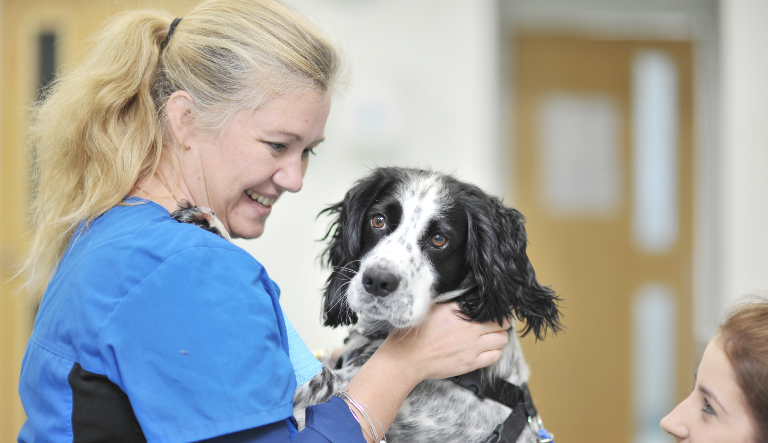
The VCA Difference: Patient Monitoring Skills That Save Lives
Please note – All veterinary professionals are welcome to attend this webinar.
Sign up before 4pm on the day to receive the Zoom invitation to join the webinar.
| Date: | Wednesday 16th September 2026 |
| Start time: | 7.00 pm |
| Finish time: | 8.00 pm |
Kindly sponsored by;
Abbeydale Vetlink Veterinary Training

Speaker;
Sam Morgan-Hourd Cert Ed DipAVN (Medical and Surgical) RVN

Sam qualified as a veterinary nurse in 1999, working in both general and referral practice. Since qualifying she’s achieved an advanced diploma in both medical and surgical nursing and a Certificate in Education. Sam began her teaching career in 2007 and has been with Abbeydale Vet Nurse Training since 2011, becoming a director in 2012.
Sam was also on the BVNA council for 9 years, becoming BVNA president from 2015 to 2017. She continues to now sit on the BVNA advisory council.
Sam likes to work in clinical practice during the summer holidays and is also a senior CQ OSCE examiner.
Lecture Synopsis;
Veterinary Care Assistants play a vital role in patient care, often being the first to notice subtle changes that can significantly impact outcomes. This practical webinar will explore the essential monitoring skills every VCA should possess, including TPR assessment, pain scoring, recovery monitoring, and recognising early signs of patient deterioration. Through real-life case studies and practical examples, attendees will learn how to identify concerns, communicate observations effectively, and contribute confidently to the veterinary team. Designed to enhance both clinical knowledge and professional confidence, this session celebrates the invaluable contribution VCAs make to patient welfare and veterinary practice success.
Learning Points;
- Demonstrate an understanding of essential patient monitoring techniques, including temperature, pulse, respiration (TPR), pain assessment, and recovery observations.
- Recognise early indicators of patient deterioration by identifying key respiratory, circulatory, and behavioral changes that require escalation to the clinical team.
- Apply patient monitoring knowledge to real-life clinical scenarios, supporting improved patient welfare and outcomes through timely observation and intervention.
- Communicate patient observations effectively and confidently within the veterinary team, enhancing their contribution to patient care and reinforcing the value of the VCA role.
If you should have any questions, please do not hesitate to contact; [email protected].
Register for this CPD
Go to Provider Website →Location
Online
Organisers

BVNA
No reviews yet. Be the first to leave a review!
What did you think?
Leave a review to help others